Essential Installation Practices for Accurate and Reliable Metering
Essential Installation Practices for Accurate and Reliable Metering
Installing energy meters isn’t just about wiring devices and powering them on, it’s about ensuring long-term accuracy, safety, and interoperability across your site. A well-planned installation reduces troubleshooting time, prevents communication issues, and ensures you remain compliant with metering standards.
Below, we walk through some of the most common installation considerations and questions raised by customers, unpacking the “why” behind each requirement and helping integrators, contractors, and facility teams get the most from their metering hardware.
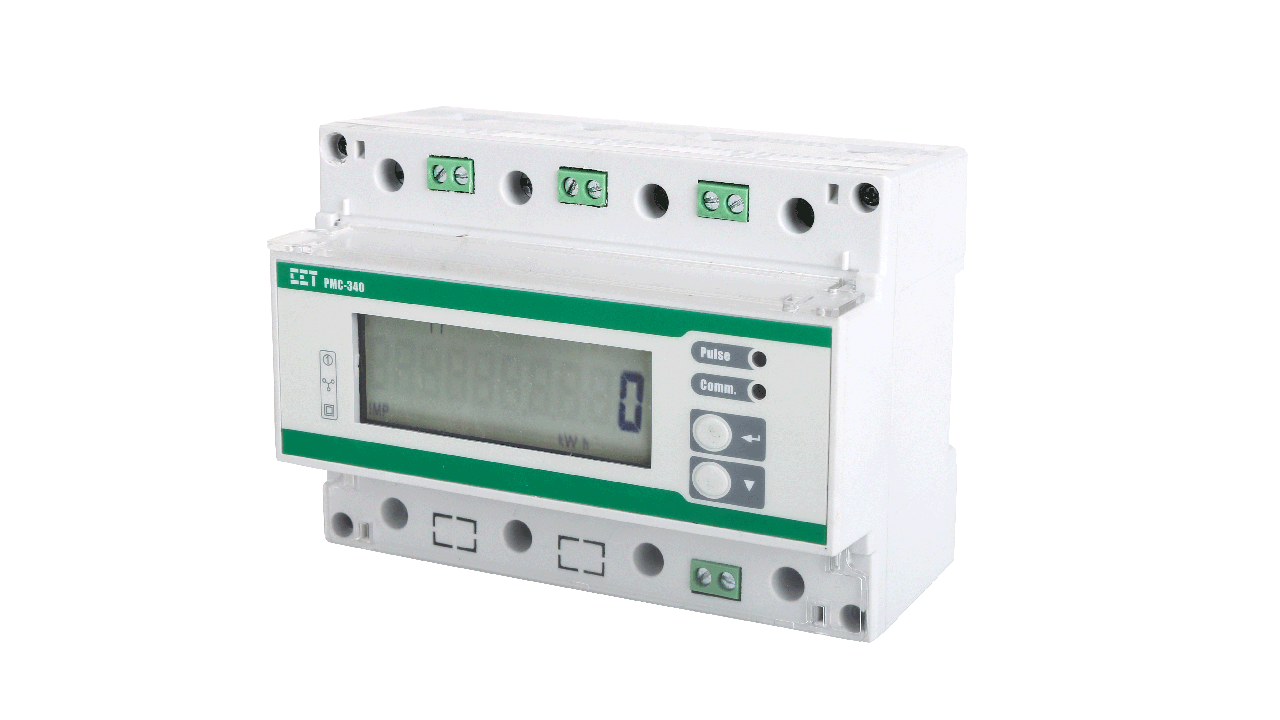
1. RS485 Bus Design: Keeping Your Communications Stable
RS485 remains one of the most widely used communication methods in industrial and metering environments because of its robustness and simplicity. But despite its reliability, misconfigured networks can lead to intermittent data loss, device drop-outs, or inconsistent polling.
Key guidelines:
-
You can connect up to 32 devices on a single RS485 bus.
-
The total cable length should not exceed 1,200 metres end-to-end.
-
Always maintain a daisy-chain topology—avoid star connections that introduce signal reflections.
-
Add termination resistors (120–150 ohm) at the final device, and in some cases at both ends of the bus, to keep the communication stable.
When RS485 rules are followed, your metering network remains noise-resistant and highly reliable, even across long distances or electrically noisy environments.
2. HRC Fuses: Protecting the Meter and the Installation
HRC (High Rupturing Capacity) fuses are critical for ensuring safe meter installation practices. They are designed to safely interrupt high fault currents without exploding or causing equipment damage — protecting both the premises and the meter itself.
Why they matter:
-
They ensure compliance with safe installation practices.
-
They prevent catastrophic damage in the event of a fault.
-
They help maintain the integrity of the electrical installation.
Each meter type has specific fuse requirements, so always refer to the specification sheet or installation guide for correct sizing.
3. Understanding Short-Time Overcurrent Rating
Every meter must be able to withstand brief surges in current without damage. This is especially important for direct-connect meters that do not rely on external CTs.
The short-time overcurrent rating defines this resilience. For LPA’s NMI-compliant direct-connect meters, this rating typically aligns with IEC 62053-21 requirements:
-
The meter must withstand 30 × Imax for 10 milliseconds
-
No damage, loss of accuracy, or operational failure should occur during this surge
These surges may occur during faults or switching operations, so the rating ensures the meter remains safe and dependable under real-world grid conditions.
4. Rogowski Coils vs CTs: Why It Matters for Revenue Metering
Rogowski coils (RCs) are excellent for high-current measurements, temporary installations, and power quality analysis because they are lightweight, flexible, and easy to install. However, they do not offer the accuracy or stability required for revenue-grade metering.
Important distinction:
-
Rogowski coils cannot be used for NMI-compliant revenue metering.
-
LPA’s NMI-certified meters require solid-core or split-core CTs designed to meet accuracy class requirements.
CTs and Rogowski coils operate on different measurement principles, and only CTs can satisfy the strict accuracy and stability requirements for billing applications.
5. Calculating CT VA Rating: Getting Sizing Right
Choosing the right CT involves more than selecting a ratio that matches the load. The VA rating ensures the CT can drive the connected burden (meter + wiring) without accuracy loss.
To calculate the VA rating:
Step 1: Understand the key formulas
-
Power:
VA = Current × Voltage -
Voltage across burden:
V = Is × R
Combined, this gives the most used formula:
VA = (Is)² × R
Where:
-
Is = secondary current (A)
-
R = burden resistance (ohms)
Step 2: Apply the formula
Example for a PMC-100A-40mA CT:
-
Secondary current: Is = 0.04 A
-
Burden: R = 20 Ω
VA = (0.04)² × 20
VA = 0.032
This tells us the CT must be rated above 0.032 VA to maintain accuracy. Selecting a CT with insufficient VA can introduce measurement errors, especially over long lead lengths or in multi-meter installations.
Installation Accuracy Starts at the Foundation
Correct installation isn’t just an engineering formality, it fundamentally determines the accuracy, safety, and longevity of your metering system.
Following best practices for RS485 communication, protective fusing, CT selection, and wiring integrity ensures your meters perform reliably for many years.
If you need support choosing the right metering hardware, designing an RS485 network, or selecting CTs that meet compliance requirements, LPA’s technical specialists are here to help.